Most drivers know about shocks and struts, but several less obvious suspension parts are doing just as much to keep the car stable and predictable. Sway bars, control arms, and bushings help control wheel movement, maintain alignment, and keep the body from moving excessively when you brake, turn, or drive over uneven pavement.
These parts can wear gradually, so the change is easy to get used to. The car may start feeling slightly looser, develop a clunk over bumps, or wear one tire differently from the others. By the time the problem becomes obvious, the worn component may already be affecting several parts of the suspension.
What the Sway Bar Does During a Turn
A sway bar connects the suspension on the left and right sides of the vehicle. When the car enters a turn and the body begins leaning toward the outside wheels, the bar twists and resists some of that movement.
The sway bar does not prevent all body roll, nor should it. Suspension still needs to move independently over bumps. Its job is to help control how much one side of the body rises while the other side compresses.
Small sway bar links connect the bar to the suspension. Bushings hold the bar in position while still allowing it to twist. When those parts wear, you may hear knocking over uneven roads or notice that the vehicle feels less controlled through curves.
Control Arms Keep the Wheels in Position
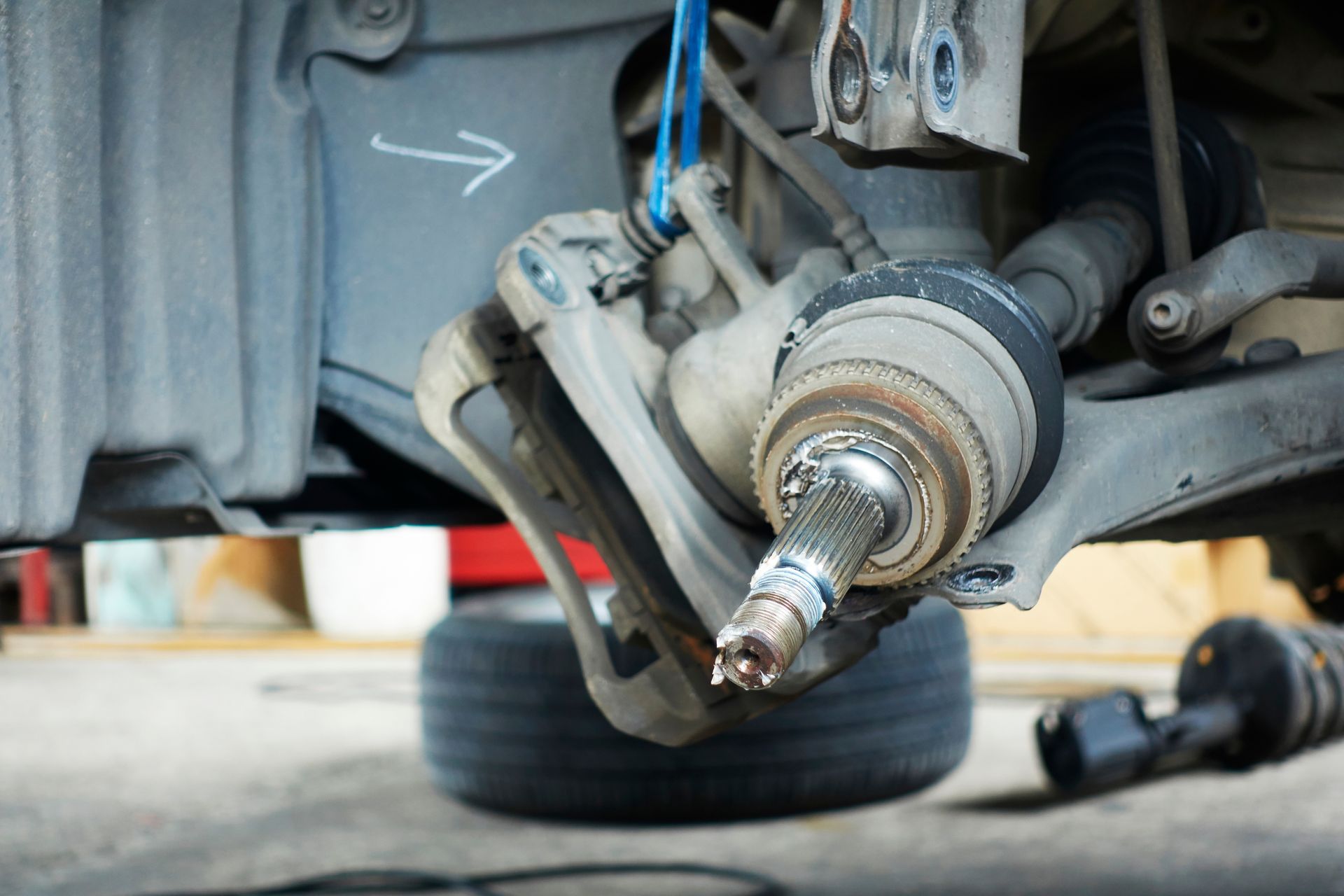
Control arms connect the wheel assembly to the vehicle's frame or subframe. Their shape and mounting points allow the wheel to move up and down while staying at the correct angle.
A vehicle may use upper control arms, lower control arms, or several individual suspension links depending on the design. Ball joints are often attached to or built into these arms so the wheel can move with the suspension while also steering.
When a control arm bends after a hard impact, or its mounting points develop wear, the wheel may no longer stay where it should. That can change alignment, steering response, and tire wear even before you hear a noise.
Bushings Control Movement Without Making the Ride Harsh
Suspension parts cannot simply be bolted together metal-to-metal. Bushings provide controlled movement while absorbing vibration and road shock.
Most are made from rubber or a similar flexible material. Over time, heat, age, road contamination, and repeated suspension movement can cause the material to crack, soften, or separate from its sleeve.
Signs of worn bushings can include:
- Clunking when braking or accelerating
- Squeaking over bumps
- Steering that feels less precise
- Uneven tire wear
- A small shift in direction after hitting a bump
- Excessive movement from a control arm
At our shop, we look at how much the bushing moves under load. A few surface cracks don't always mean immediate replacement, but a bushing that lets the arm shift significantly can affect handling and alignment.
Why These Parts Can Make the Car Feel Loose
A small amount of play in one suspension component may not feel severe on its own. The problem becomes more noticeable when several parts are worn at the same time.
A soft control arm bushing can let the wheel move slightly during braking. Worn sway bar links can allow more body movement through turns. Add tired shocks or uneven tire pressure, and the vehicle may feel much less settled, even though no single part has completely failed.
This is why we pay attention to the overall pattern. If the car wanders, leans more than before, or needs constant steering correction, we check the suspension as a system instead of replacing the first worn-looking piece.
Alignment Problems Can Begin With Suspension Wear
Wheel alignment depends on suspension parts holding their positions accurately. If a control arm bushing allows the arm to shift, the alignment angles can change while the vehicle is moving.
You might have the alignment adjusted and then notice the same tire wear or pulling return a short time later. In that situation, we want to know whether something underneath is moving after the alignment has been set.
During an inspection, we check for looseness before making final alignment adjustments. Correcting worn parts first gives the alignment a stable foundation, instead of trying to adjust around movement that shouldn't be there.
Do Not Wait for a Suspension Part to Break Completely
Suspension wear does not always produce an emergency right away. A sway bar bushing can make noise for quite a while, while a control arm bushing may deteriorate gradually over thousands of miles.
The concern is how much movement the wear is allowing and which part is affected. A loose ball joint or badly damaged control arm deserves much quicker attention than a mild squeak from an aging rubber bushing.
Regular maintenance gives us opportunities to track these changes before they become severe. If you notice new clunks, unstable handling, uneven tire wear, or a steering change, have the suspension checked rather than assuming the car just feels different because it is getting older.
Get Suspension Repair In Fitzwilliam, NH, With KG Automotive Solutions
If your car has started clunking, squeaking, wandering, or feeling loose around turns, KG Automotive Solutions in Fitzwilliam, NH, can check the sway bars, control arms, bushings, joints, and related suspension parts for wear.